

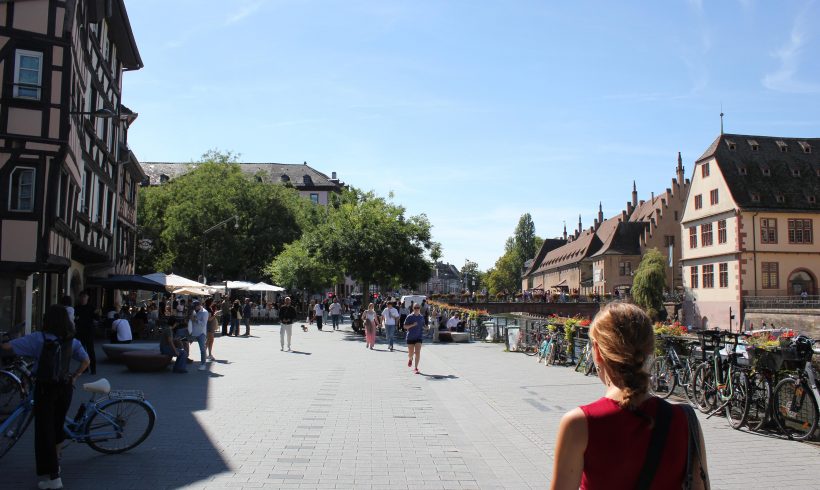
Karline is doing a one-year voluntary service with the European Solidarity Corps at the Foyer de l’Enfance in Strasbourg, France. Here she shares her experiences.
Six months ago, I got on a train in Dresden to travel to Alsace, where my ESC was supposed to begin with a two-week seminar. At that point, I had no idea where or how I would be living for the next year, what my work would look like, or how I would be provided with food. It was a little unsettling to head into the unknown like that, but luckily, everything turned out to be very nice in the end.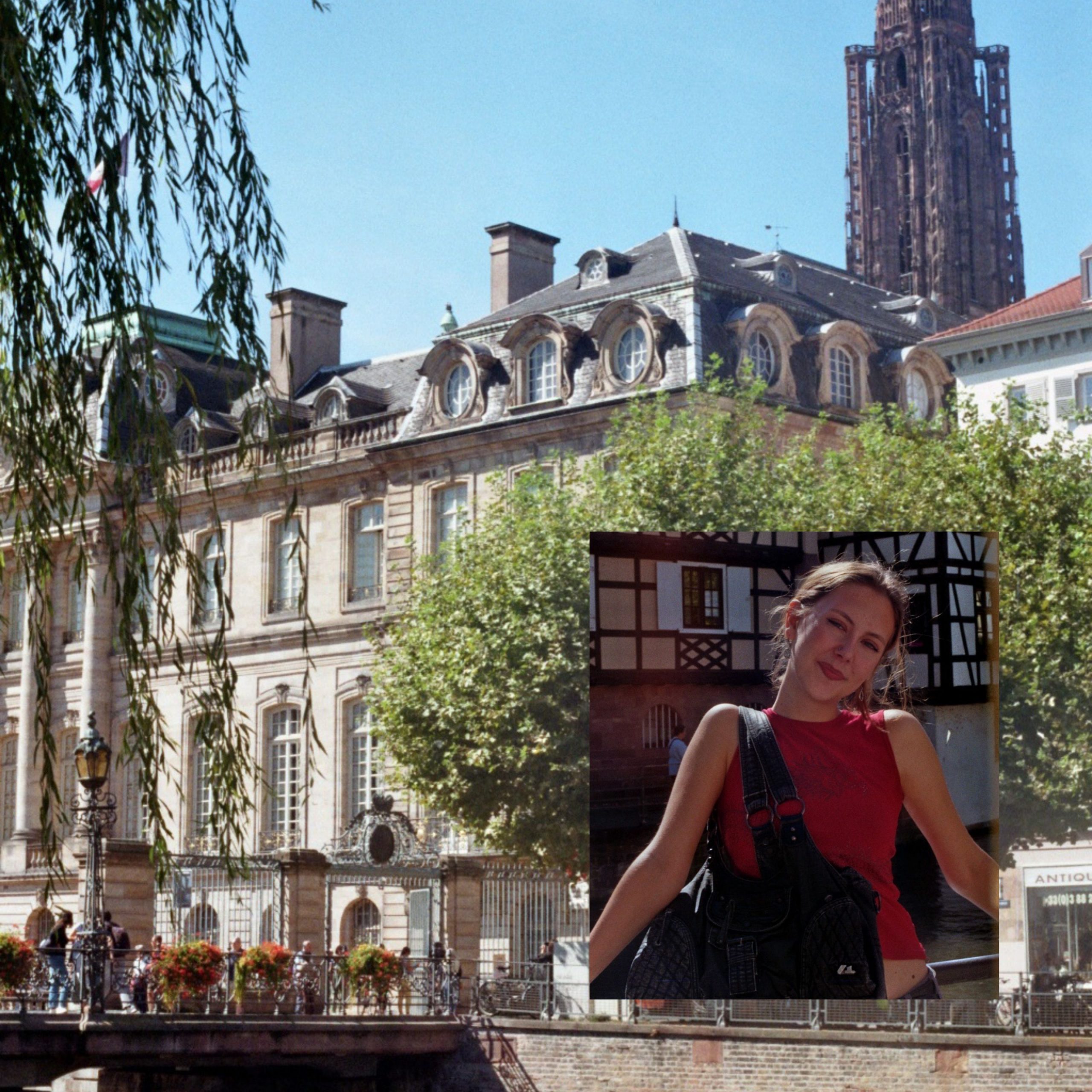
By now, the flat in the centre of Strasbourg, which I share with my fellow volunteer, has started to feel like home. At work, I have developed my routines, and our trusted cashier almost knows the number of our supermarket vouchers by heart. Five days a week, I take the bus for half an hour to the “Foyer de l’Enfance”; sometimes that means leaving at 6 a.m., sometimes not until noon, as my 35 working hours per week are very flexible. The Foyer is a children’s home that serves as a first point of contact for emergency cases, often involving neglect or domestic violence. The children, aged between 0 and 18, stay there for an average of six months until a permanent home is found for them. I have now become a fixed part of the “Explorateurs” team, a group of up to 10 children aged between 3 and 6. My everyday work consists of helping them get ready, accompanying them during meals, taking them to school and appointments and picking them up again, playing with them a lot, and putting them to bed in the evening. 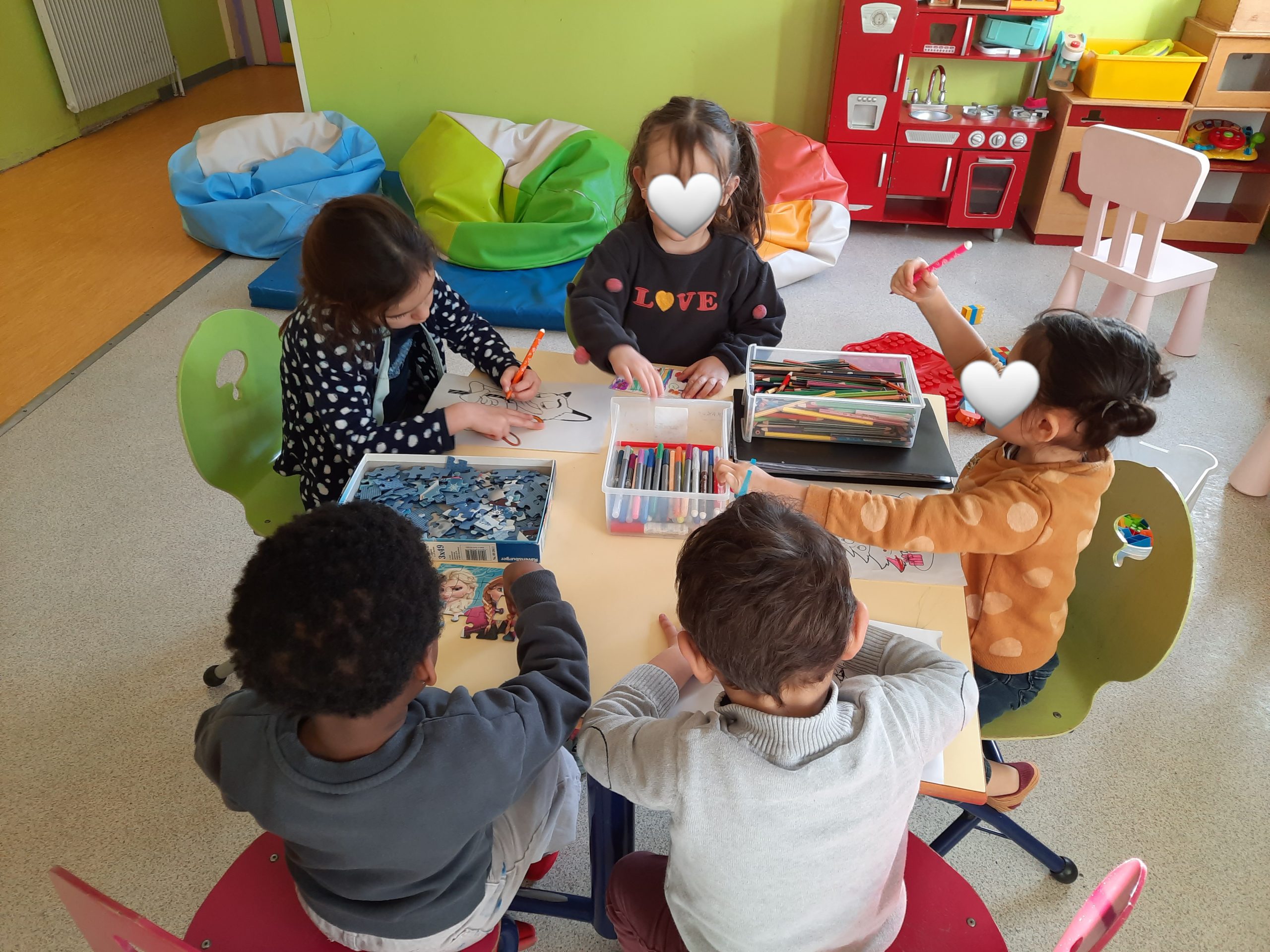 In between, there is always some housework to be done, but there is also time to get involved in craft or baking projects or small outings. Because of what the little ones have already had to go through in their lives, their behaviour is not always easy, and it has been, and still is, quite a challenge for me at times to assert myself. At the same time, this kind of social work is especially rewarding, because the children often show me very openly how happy they are that I am there, and over time they have become just as dear to me.
Fortunately, the volunteer network quickly helped me make friends, with whom I sing in a church choir, among other things. There, many kind elderly people regularly introduce us to Alsatian customs and particularities. The culture feels very familiar, from people’s names and the architecture to the culinary specialities, with many similarities on both sides of the border. Because of this, I did not really experience culture shock in the sense of feeling foreign in the country or among the people. Sometimes, however, I did wish for a few more new impressions. Luckily, thanks to several seminars and the people I met there, I have already been able to travel to Paris and Troyes; soon I will be going to Brittany, and a holiday in the south of France is also already planned.
I feel that over the past six months I have already learned to live much more maturely and consciously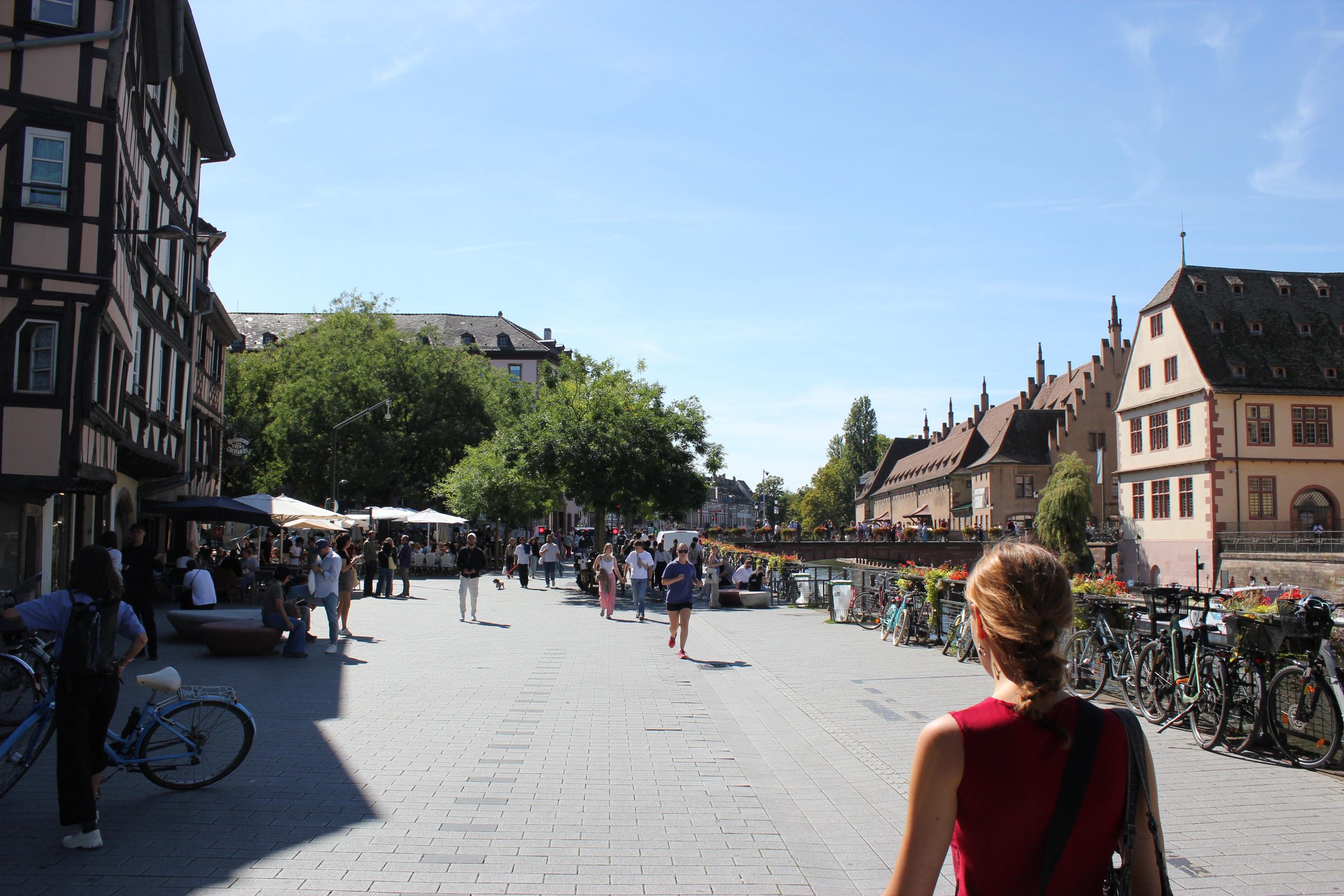 . The challenge alone of dealing with property management, the bank and driving school abroad makes you grow. In addition, communication with our coordinating organisation in France, l’Initiative Chrétienne d’Europe, has unfortunately not always been easy and has cost us quite a few nerves. Working full-time with small children, some of whom also have intellectual disabilities, is also something completely new for me. At the Foyer, I also see families breaking down, the effects of violence, and how laws then come into play, which is terrible but at the same time gives me a greater awareness of such situations. And yes, a year abroad also contributes something to “finding yourself”. 🙂
When I move back to Germany in six months, it will certainly not be easy to say goodbye to Strasbourg, but the advantage of spending a year abroad in a neighbouring country is that I can always return to my temporary home.
This project is funded by the European Solidarity Corps of the European Union.