von Freiwillige/r im Sozialen Jahr Politik | 29.03.2018 | Nicht kategorisiert
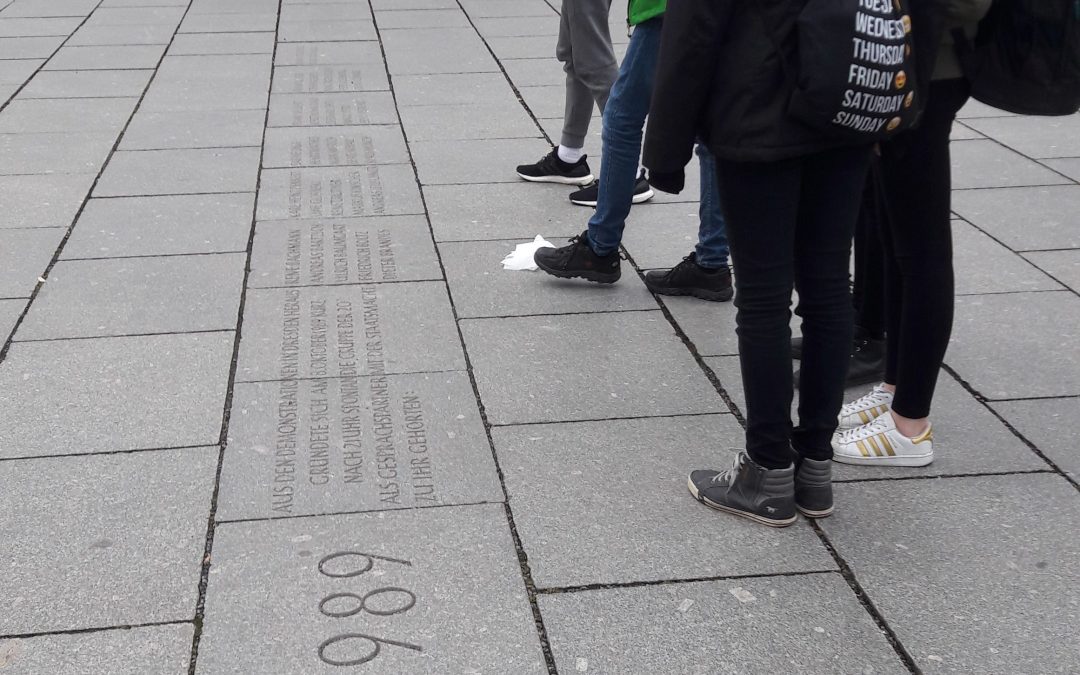
As part of the Jugendweihe (Youth consecration) we have recently performed several Actionbound tours through Dresden. With the tablet-based city tours and 6-12 years old participants we followed the traces of the Peaceful Revolution in the inner city and the fate of the Jews during the Nazi era in Dresden-Plauen. 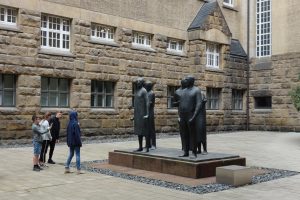
The inner city tour started at the place where the trains with the Prague embassy refugees drove through Dresden in 1989: Dresden Central Station. Even today, a small memorial plaque on the facade of the station commemorates the request for freedom and following start of the revolution, which finally led to the unification of the two German states in 1990. On the way from the Central station to the Kreuzkirche and finally to the Kulturpalast, we also talked about the Group of 20, the Ministry of State Security (Stasi), the food situation and much more. 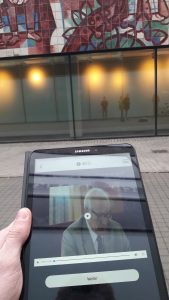
The stumbling stones tour in Dresden Plauen started in our office. After a small introductory talk about national socialism and persecuted groups, we finally set off to learn more about the biography and fate of Jewish and disabled people while standing near some of their stumbling stones. In this context, we also talked about euthanasia, the persecution of the Jews, the concentration and extermination camps, and about the destruction of Dresden. The conclusion took place in the courtyard of the former „Royal State Court“ at Münchner Platz, where many resistance fighters of the Nazi era were executed. 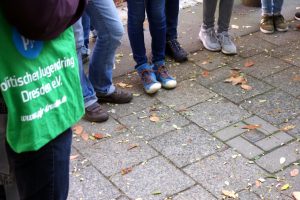
Despite the partly rainy weather with low temperatures, the participants showed great interest and also emotion in stories of fateful events and biographies. 
von Freiwillige/r im Sozialen Jahr Politik | 26.03.2018 | Nicht kategorisiert
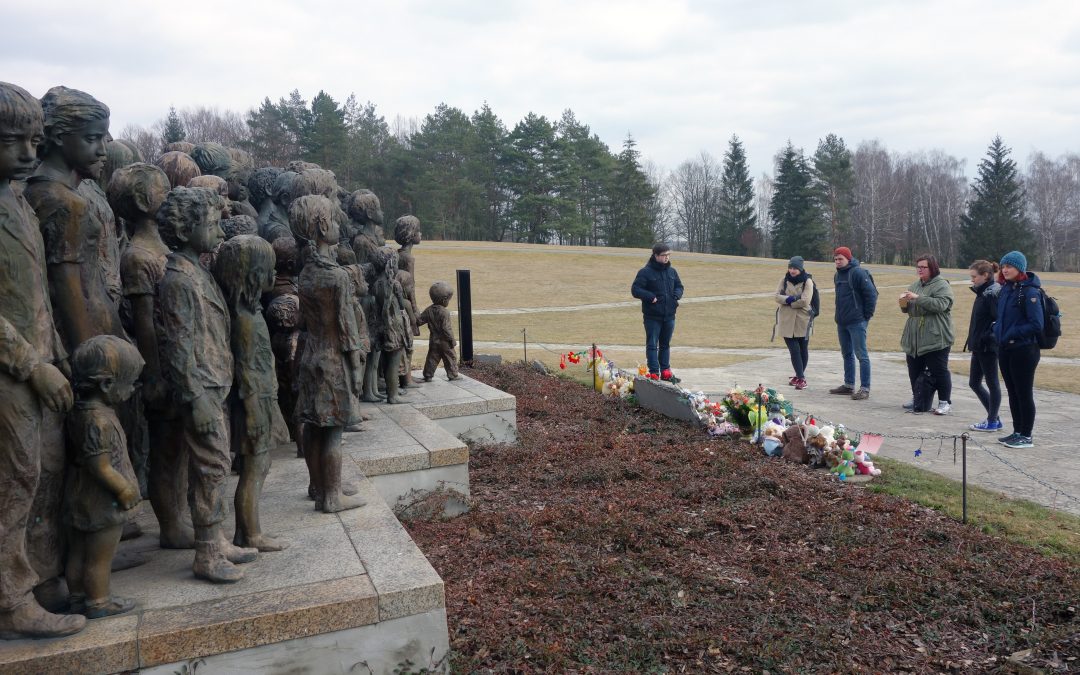
On Saturday, the 24th of March, we organized a memorial tour to Lidice as part of the International Day for the Elimination of Racial Discrimination. This is the place that was razed to the ground in June 1942 as an act of revenge for the assassination of the head of the Reich Main Security Office Reinhard Heydrich. At the same time more than a half of 500 inhabitants of the village were killed. After the war, the village was rebuilt 300 meters away. 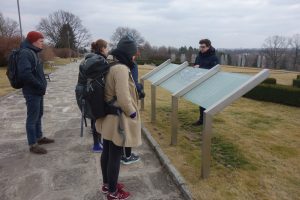
On this trip we wanted to find out what the life of the village today looks like with this historical background. For that purpose, we spent 6 hours in Lidice. We started getting acquainted with the place with a tour in the piety area - the area where the village once stood. There, with the help of a guide, we observed the foundations of the old church, the school, the Grave of the Lidice men, the Memorial of children‘ war victims and the Rose garden. 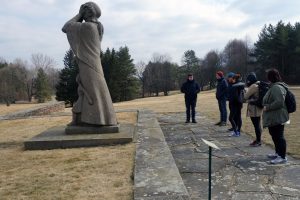
With the first impressions of the tragedy that occurred here, we went to the museum and visited the permanent exhibition, as well as a film with eyewitness interviews. Later, after the lunch break, we visited the exhibition „We are building a new Lidice“ in the family house №116. The family house №116 is one of the original houses that were built as part of the development of the new Lidice after 1945. The authentic furniture of that time made for a very cozy atmosphere. 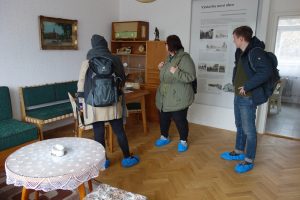
The last stop of our tour was the Lidice Gallery, where we visited the modern art exhibition „Remember Lidice“. It consists of gifts to Lidice by artists from all over the world and the photographic project „My home - witness of portraits“. We also watched a short documentary film about the outbreak of the war, the assassination of Heydrich, the burning of Lidice, the end of World War II and the subsequent return of women to Lidice from concentration camp.
In the end the participants shared with us their impressions of the visit, got small gifts from us and we started our way back.
von Freiwillige/r im Sozialen Jahr Politik | 26.03.2018 | Blog
Am Samstag, den 24. März, haben wir im Rahmen der Internationalen Wochen gegen Rassismus eine Gedenkstättenfahrt nach Lidice organisiert. Das ist der Ort, der im Juni 1942 als Racheakt für das Attentat auf den Leiter des Reichssicherheitshauptamts Reinhard Heydrich den Erdboden gleichgemacht wurde. Dabei wurde auch mehr als die Hälfte der 500 damaligen Einwohner des Dorfes umgebracht. Nach dem Krieg wurde das Dorf in 300 m Entfernung neu aufgebaut.
Wir wollten bei dieser Fahrt erfahren, wie sich das Leben heute vor diesem historischen Hintergrund gestaltet. Dazu haben wir in Lidice insgesamt 6 Stunden verbracht. Unser Kennenlernen des Ortes hat mit einer Tour im Pietätsgebiet angefangen, das ist der Bereich, wo früher das Dorf stand. Dort haben wir uns mit Begleitung eines Reiseführers die Fundamente der alten Kirche, der Schule, das Grab der Lidicer Männer, das Denkmal der Kinderkriegsopfer und den Rosengarten angeschaut.
Mit den ersten Eindrücken von der Tragödie, die hier geschehen ist, sind wir danach ins Museum gegangen und haben die Dauerausstellung, sowie einen Film mit Zeitzeugeninterviews angesehen. Später, nach der Mittagspause, haben wir die Ausstellung „Wir bauen ein neues Lidice“ im Familienhaus №116 angesehen. Das Familienhaus №116 ist eines der ursprünglichen Häuser, die als Teil der Entwicklung des neuen Lidice nach 1945 gebaut wurden. Die authentischen Möbel dieser Zeit sorgten für eine sehr gemütliche Atmosphäre.
Die letzte Station unserer Besichtigung war die Lidicer Gallerie, wo wir uns die moderne Kunstausstellung „Remember Lidice“ angeschaut haben. Diese besteht aus Geschenken an Lidice von Künstlern aus aller Welt und dem fotografischen Projekt „Mein Zuhause – Zeugnis des Portraits“. Dabei haben wir uns auch mit einer kleiner Doku über den Ausbruch des Krieges, das Attentat auf Heydrich, das Niederbrennen von Lidice, das Ende des 2. Weltkriegs und die darauf folgende Rückkehr der Frauen nach Lidice aus dem KZ beschäftigt.
Am Ende haben die Teilnehmer mit uns ihre Eindrücke von der Besichtigung geteilt, kleine Geschenke von uns gekriegt und wir haben uns auf den Rückweg gemacht.
von Freiwillige/r im Sozialen Jahr Politik | 09.03.2018 | Blog
Am 06. März haben unsere EFD-lerin Marina und unser Praktikant Martin eine Präsentation zu den russischen Präsidentschaftswahlen gehalten, die am 18. März 2018 stattfinden werden. Marina, die selbst aus Russland stammt, hat den Anwesenden das russische Wahl- und Regierungssystem erklärt. Dabei ging sie auf vergangene Wahlen ein und stellte zunächst die vergangenen Präsidenten vor. Anschließend wurde der Blick auf die aktuellen Kandidaten gerichtet, die in Russland in diesem Monat zur Wahl stehen. 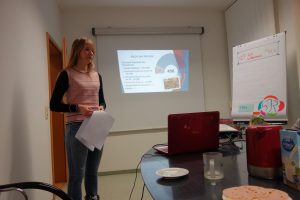
Insgesamt stehen am 18. März 8 Kandidaten zur Wahl. Das Spektrum geht dabei vom kommunistischen Kandidaten Maxim Suraykin bis zum rechtspopulistischen Wladimir Schirinowski. Zudem steht mit Xenija Sobtschak neben 7 Männern lediglich eine Frau zur Wahl. Des Weiteren wurde das Registrierungssystem erläutert, welches jeder Präsidentschaftskandidat durchlaufen muss. Bei diesem muss jeder Kandidat zunächst von einer Wahlkommission bestätigt werden. Auch Besonderheiten wie Wahlkameras und portable Wahlkoffer wurden vorgestellt. Zum Abschluss ihres Parts stellte Marina westliche Kritik an den russischen Präsidentschaftswahlen vor. Diese richtet sich unter anderem gegen den Ausschluss von Politikern wie Alexei Nawalny. 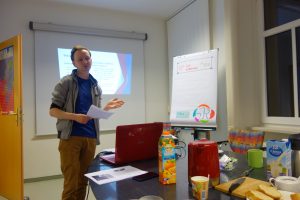
Hieran schloss sich Martins Teil an, der eine Betrachtung zur Demokratiebewertung von Russland beinhaltete. Dabei wurden die Wahlen und Wahlkampagnen an Demokratiekriterien gemessen und anschließend diesbezüglich eingestuft. Zur Beurteilung der Lage wertete er Wahlbeobachtungsberichte vergangener Wahlen sowie Berichte zur aktuellen Situation aus. Die meisten davon waren von der OSZE, die selbst Wahlbeobachtungen durchführen lässt. Im Vortrag wurde auf Wahlmanipulationen und mangelnde Chancengleichheit hingewiesen. Es wurde schlussendlich festgestellt, dass Russland nicht alle Demokratiestandards erfüllt und dass die Fairness der Wahl bezweifelt werden kann.
Der Vortrag wurde in gemütlicher Runde sehr interaktiv gehalten. Sehr zur Freude der Referenten gab es viele Fragen der Anwesenden, die innerhalb der Runde diskutiert wurden. Somit kam es zu produktiven Diskussionen, bei denen Meinungen und Wissen ausgetauscht wurden.
Die Präsentation könnt ihr unter dem folgenden Link runterladen: Präsidentschaftswahl in Russland 2018
von Freiwillige/r im Sozialen Jahr Politik | 08.03.2018 | Nicht kategorisiert
Дорогие друзья,
закончилась моя первая европейская зима, и мне хотелось бы поделиться с вами тем, как я её провела. 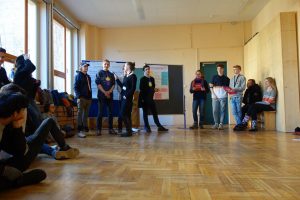
В декабре мы с PJR Dresden проводили семинары по теме „Социальные медиа“, после которых я сама смогла узнать новое об использовании социальных сетей. Однако самым ярким мероприятием было модулирование муниципальной политики: десятиклассники из школы Вальдорфшуле разделились на 4 партии и обсудили строительство нового приюта для берженцев в Дрездене в формате городского совета. Я была ответственна за журналистов, которые провели интервью, собрали информацию и составили пресс-стену. Мне очень понравилось их координировать, и я на практическом опыте поняла, как работает городской совет. 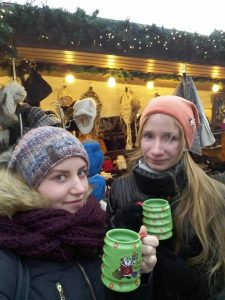
Почти всё своё свободное время я провела в Дрездене, так как здесь проходило мероприятие, которое ни в коем случае нельзя было пропустить - Рождественский базар! В самом сердце города, на площади Альтмаркт, находится самый старый и красивый рождественский базар Германии - Штрицельмаркт, который существует уже почти 600 лет. Его я часто посещала с моими друзьями, каждый раз с удовольствием пробовала глинтвейн, а также узнавала о дрезденских традициях, таких как штоллен или сливовый человечек.
Начало нового года
Новый год и начало января я провела дома с моей семьёй и друзьями, по которым я очень скучала. По возвращении в бюро было достаточно спокойно и проходило не так много мероприятий, но я приняла участие и помогла с проведением вечернего просмотра фильма „Шоа“ („холокост“ на иврите), который был организован FSJ-волонтёром Клеменсом. Эпизоды фильма, которые он показывал, произвели на меня впечатление и заставили задуматься. 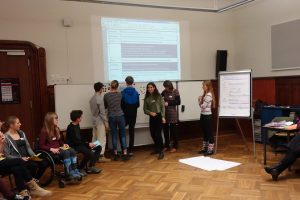
В феврале снова начались семинары „Социальные медиа“, кроме того, мы подготовили и провели организационную встречу к немецко-израильскому молодёжному обмену. Моей основной задачей на ней было провести со школьными игру на знакомство. Игра прошла хорошо и очень меня порадовала.
EVS-семинар, европейские столицы и российские выборы
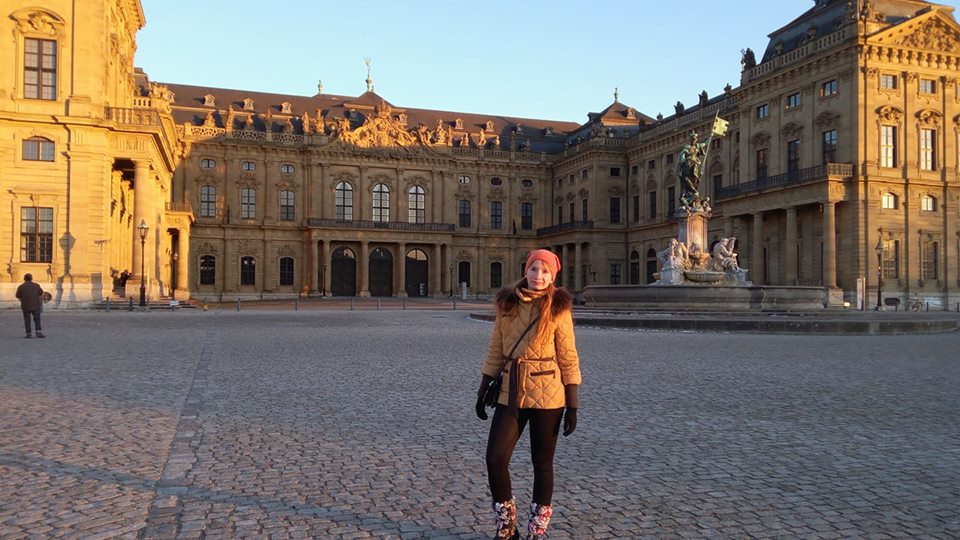
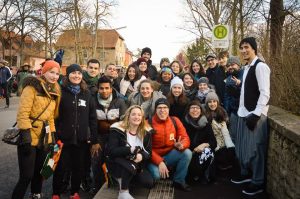 В середине месяца я провела 5 дней в Вирцбурге на втором семинаре для волонтёров (семинар „по истечении половины времени“). Там я познакомилась с 17 другими волонтёрами, поделилась опытом со своего проекта, поиграла и интерактивные игры, узнала больше о YouthPass - документе, который получают все волонтёры по окончании проекта - и перспективах после EVS, и побавала на первом в моей жизни карнавале. Таким образом, могу сказать, что я провела время с пользой.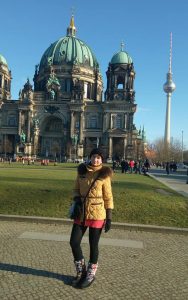
Февраль я также назвала „месяцем двух столиц“, так я снова посетила Берлин и в первый раз в жизни - Париж. В Берлине я наконец получилась возможность сходить в мой любимый собор - Берлинский кафедральный собор, а в Париже - осуществить свою подростковую мечту и вживую увидеть Эйфелеву башню.
В последние пару недель я была занята подготовкой мероприятия, которое прошло позавреча: доклада „Президентские выборы в России 2018“. К нему наш практикант Мартин и я подготовили презентацию. 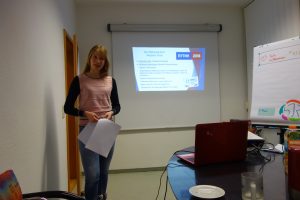 В своей части я рассказывала о процедуре выборов, прошлых выборах, кандидатах, их программах и оппозиции власти, затем вступил Мартин с его оценкой того, наколько демократичны данные выборы. Слушатели задали нам много вопросов, в результате которых родилась плодотворная дискуссия.
С наилучшими пожеланиями,
Марина
Европейская добровольная служба финансируется средствами ERASMUS+ из Европейского Союза.