by ESK-Freiwillige | 27.05.2026 | Nicht kategorisiert
My year in Germany:
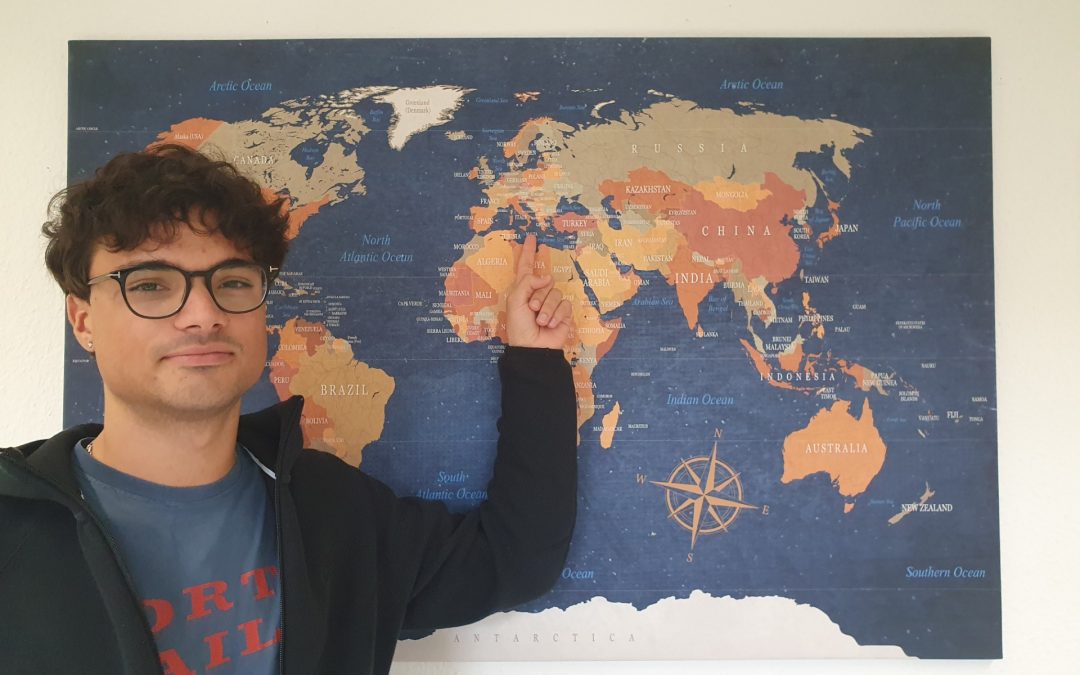
At the beginning of September, I started working here in Dresden and immediately felt comfortable in the office. However, when it came to working with the young people in the classrooms, it took me some time before I felt 100% ready.
In this regard, the office organized a German course for me, which was very helpful from the very beginning, especially because in March, as part of a workshop on racism, I had to give a presentation on colonialism research, which we later presented in different schools.
During this year, I took part in two seminars: the first one in Weimar and the second one in Bremen. Both were wonderful experiences that I will remember in the future as well, mainly because I was able to meet many new people from all over the world and also keep my English level at a good standard.
I would like to sincerely thank my colleagues for giving me the opportunity to work here in Dresden.
Eliseo Guazzarotti.
by ESK-Freiwillige | 27.05.2026 | Nicht kategorisiert
Olá,
I have now been doing my ESC volunteering service in Figueira da Foz, Portugal, for almost 9 months. Figueira is a small coastal town located roughly in the middle of Portugal and is very well connected by long-distance buses and trains to almost all major cities in the country.
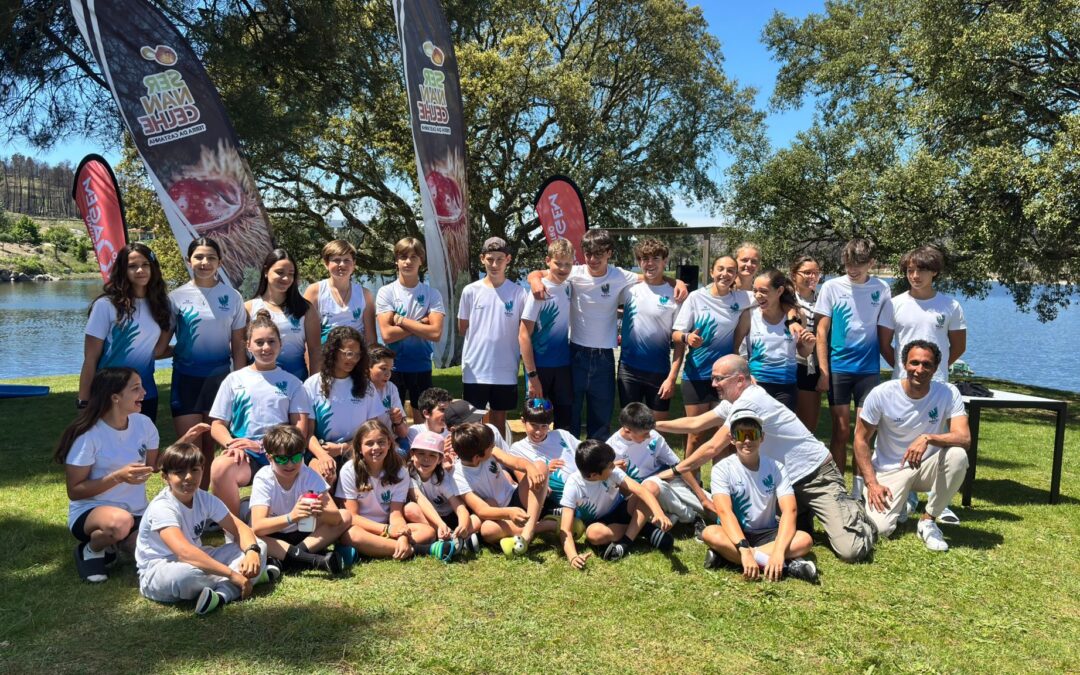
I work at a rowing and kayaking club. My main tasks are supporting the coaches during training sessions with children aged 7 to 17 and helping at competitions. In addition, twice a week there is a project for children and teenagers with disabilities, who, together with us volunteers and a coach, learn rowing and kayaking and take part in other sports and group activities.
What I especially like is how international our club is. Both coaches and athletes come not only from Portugal, but also from Brazil, Cuba, Belarus, Ukraine, Russia, the Netherlands, South Africa, and Argentina, so you are constantly interacting with people from many different parts of the world. The same goes for my fellow volunteers from France and Spain, whom I get along with really well. In general, there is a very open atmosphere among parents, coaches, and athletes alike. I have also had the opportunity to gain insight into the lives of professional athletes and even meet European champions and Olympians.
Of course, language is very important when working with children, but that also forces you to speak and helps you improve quickly. In addition, I attend a language course together with other volunteers from Germany who work in kindergartens here, where I can expand my rather specialized work-related vocabulary into something more useful for everyday life (outside of work, I rarely have to correct someone’s kayaking technique :)).
During the winter, we definitely noticed that even in the south it is not always warm, especially because the houses are hardly insulated and there is no heating. Portugal was also hit quite hard by storms and flooding in January and February; in our city, even a Ferris wheel and a crane collapsed.
But now it is basically already summer, and I am looking forward to the remaining three months in Figueira.
Beijinhos from Portugal.
by Tobias | 27.04.2026 | Nicht kategorisiert
My Voluntary Year in Poland
Hey,
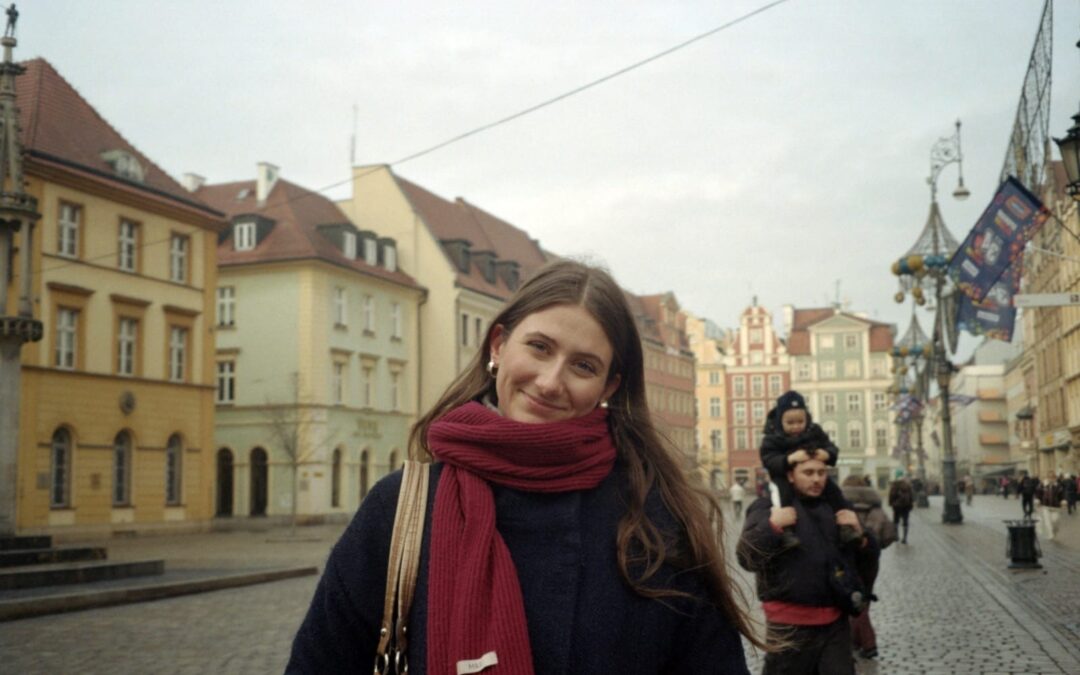
my name is Selma. I am 21 years old and I am currently doing a 9-month voluntary service with the European Solidarity Corps in Opole, Poland.
I come from Berlin and finished school there in the summer of 2025. After that, it was clear to me that I did not want to start studying right away, but rather take a year off from all the studying.
A voluntary service was a good opportunity for this. I have the chance to travel to another country, meet new people and learn new things, while at the same time my work enriches the communities here in the surrounding area.
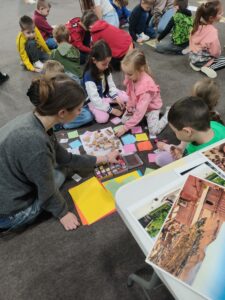
My main task here is to help students from different schools become more familiar with the English language. We do this through interactive workshops, which I lead in English. If there are any communication problems, my coordinator is on site and speaks to the students in Polish.
This work is very varied, as the students’ ages differ greatly (7–20 years), their level of English is always different, and their engagement in the lessons also varies a lot.
90% of the time, I really enjoy this work. It is very interesting to exchange ideas with the students about our different cultures, and I always learn something new. Speaking so much in front of large groups has also helped me to speak more freely and confidently, and it has taken away my fear of approaching people I do not know.
Although these workshops are my main task, there is no typical day in my voluntary service. Each week is structured differently, and we help with many different activities. Other activities include, for example, workshops in our local youth club, office work, support at major events organised by the University of Opole or our NGO, as well as support for the Association of the German Minority, which has an office here in Opole. I really like the fact that my work is so diverse and that not every day looks exactly the same. I need this variety, both in terms of my tasks and my working hours; a fixed 9-to-5 job would personally appeal to me less.
 When I arrived in Poland in November, I did not really know what to expect. I was confronted with many things at once: a new language, new people and a completely different everyday life. Now, six months later, most things already feel very familiar. I have found friends, I attend Polish lessons, I have got used to my job, I can find my way around Opole, and I have travelled a lot within Poland.
This voluntary year has shaped me personally more than I expected. I have learned how to cope with being on my own, how to deal with my insecurities, and how to approach new people and situations more openly.
I am excited to see what I will experience in the last three months. But when I look back on the past months now, I am above all grateful: for the experience, my new friends, the emotional rollercoaster I went through in my first month, and also for the challenges.
An ESC voluntary service is definitely not always easy, and there are times when everything unfamiliar and new can feel very overwhelming, but that is exactly what makes it so valuable.
by Tobias | 10.02.2026 | Nicht kategorisiert
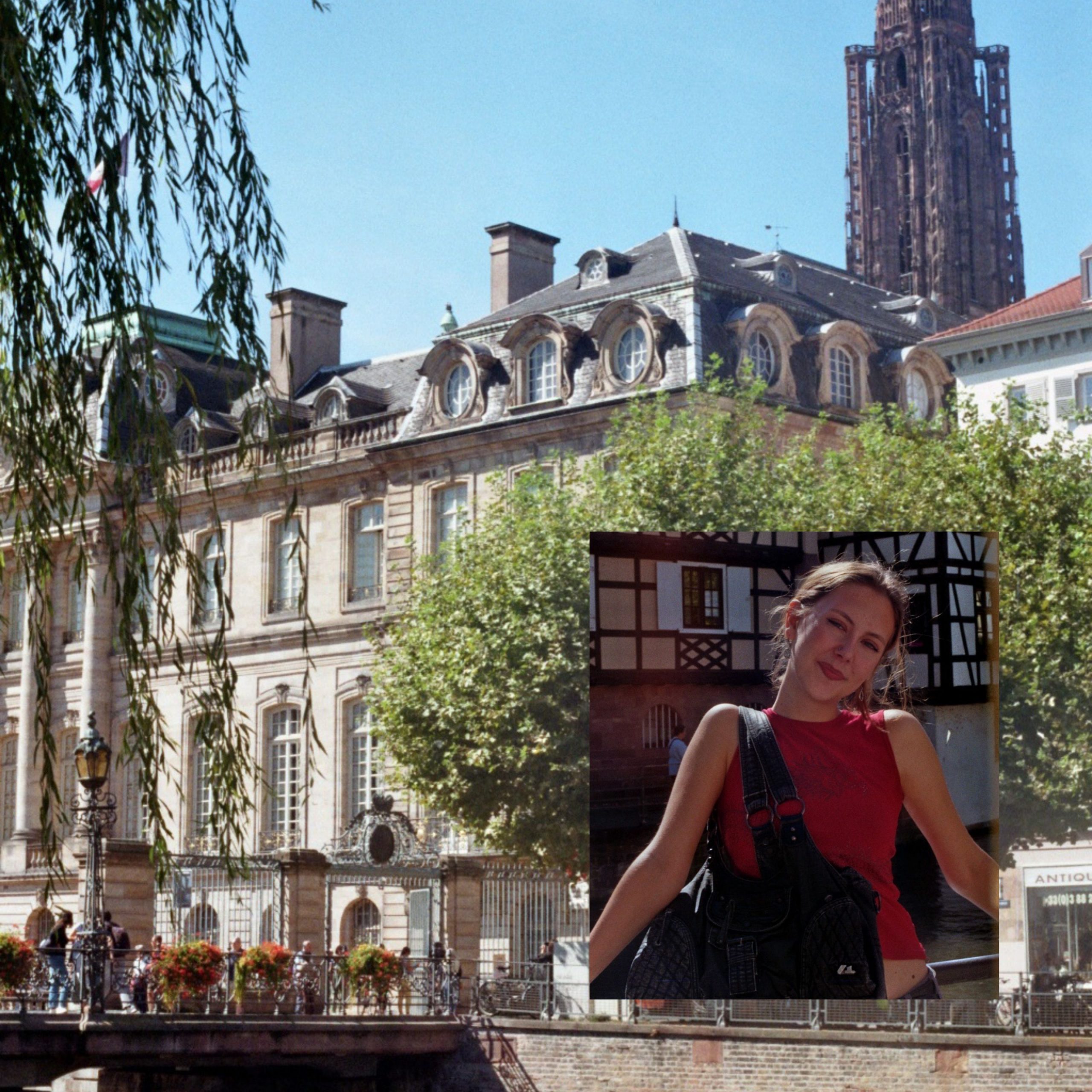
Karline is doing a one-year voluntary service with the European Solidarity Corps at the Foyer de l’Enfance in Strasbourg, France. Here she shares her experiences.
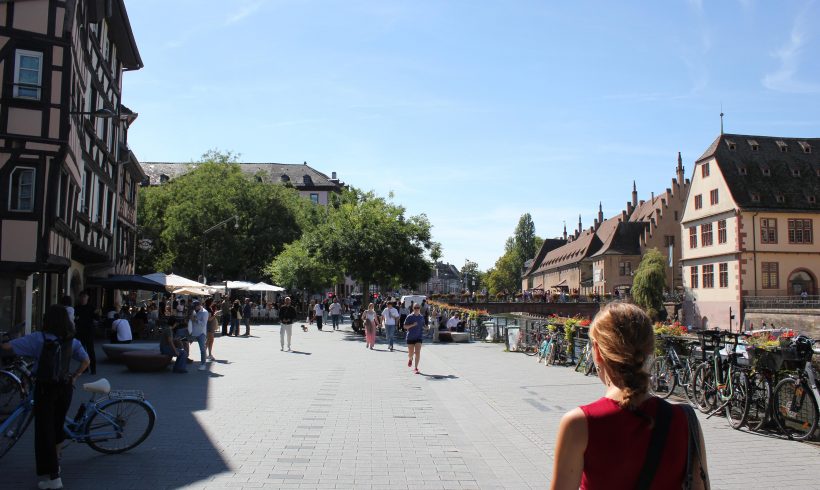
Six months ago, I got on a train in Dresden to travel to Alsace, where my ESC was supposed to begin with a two-week seminar. At that point, I had no idea where or how I would be living for the next year, what my work would look like, or how I would be provided with food. It was a little unsettling to head into the unknown like that, but luckily, everything turned out to be very nice in the end.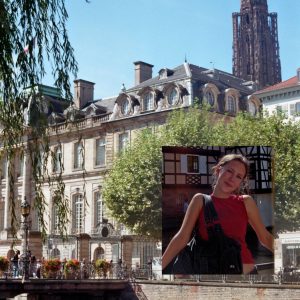
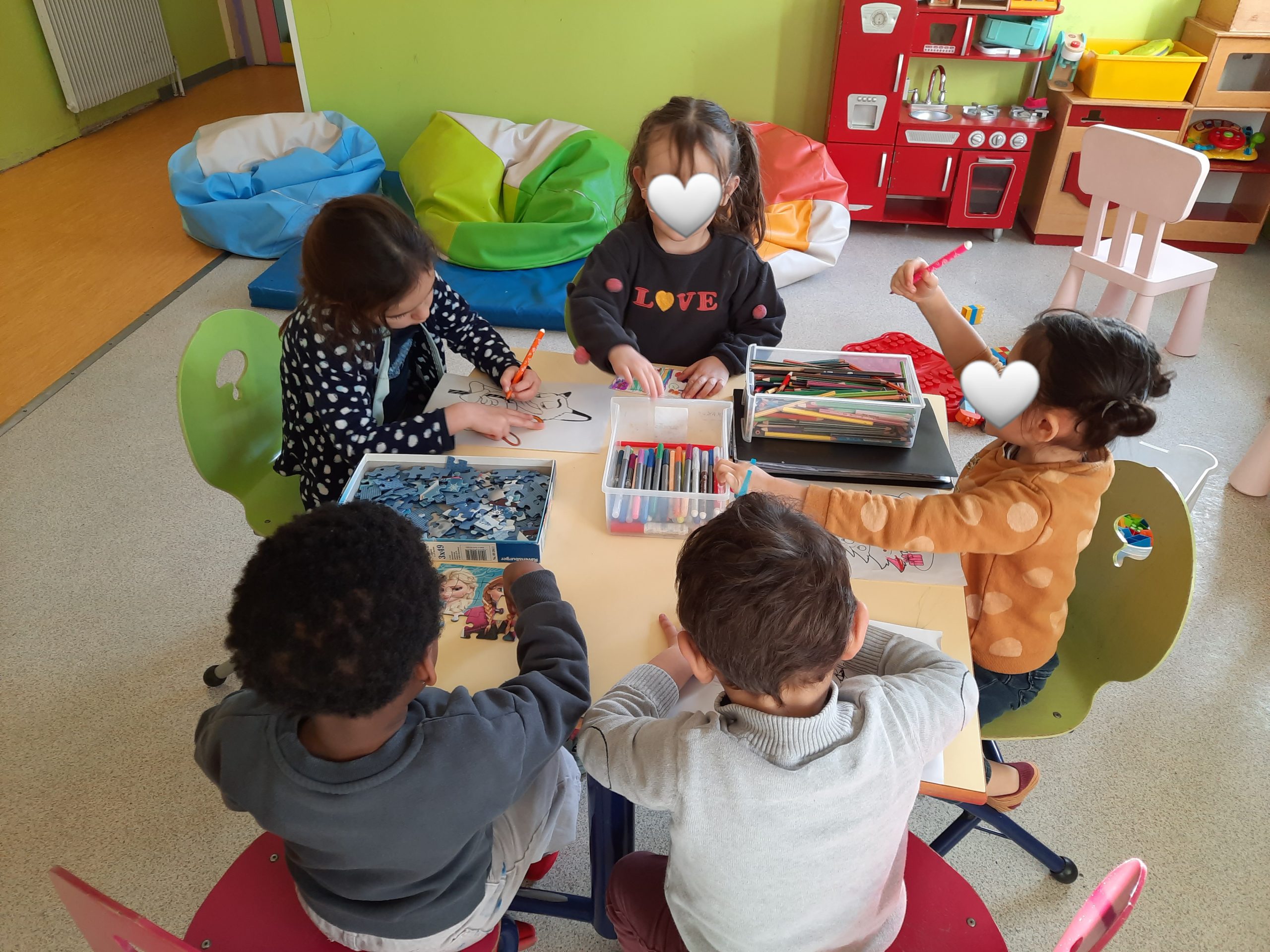
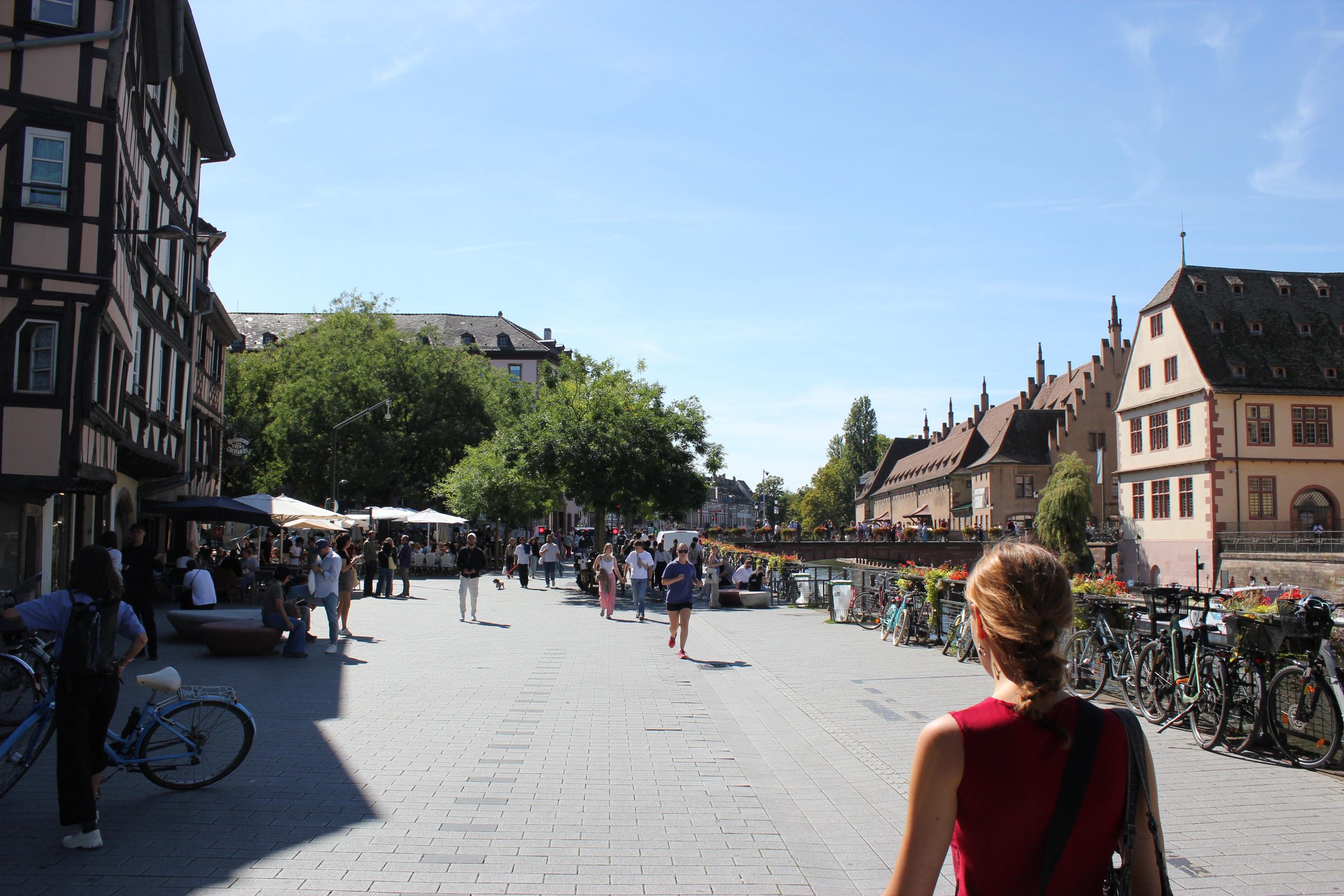
By now, the flat in the centre of Strasbourg, which I share with my fellow volunteer, has started to feel like home. At work, I have developed my routines, and our trusted cashier almost knows the number of our supermarket vouchers by heart. Five days a week, I take the bus for half an hour to the “Foyer de l’Enfance”; sometimes that means leaving at 6 a.m., sometimes not until noon, as my 35 working hours per week are very flexible. The Foyer is a children’s home that serves as a first point of contact for emergency cases, often involving neglect or domestic violence. The children, aged between 0 and 18, stay there for an average of six months until a permanent home is found for them. I have now become a fixed part of the “Explorateurs” team, a group of up to 10 children aged between 3 and 6. My everyday work consists of helping them get ready, accompanying them during meals, taking them to school and appointments and picking them up again, playing with them a lot, and putting them to bed in the evening. 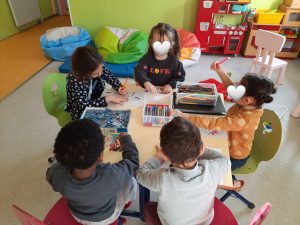 In between, there is always some housework to be done, but there is also time to get involved in craft or baking projects or small outings. Because of what the little ones have already had to go through in their lives, their behaviour is not always easy, and it has been, and still is, quite a challenge for me at times to assert myself. At the same time, this kind of social work is especially rewarding, because the children often show me very openly how happy they are that I am there, and over time they have become just as dear to me.
Fortunately, the volunteer network quickly helped me make friends, with whom I sing in a church choir, among other things. There, many kind elderly people regularly introduce us to Alsatian customs and particularities. The culture feels very familiar, from people’s names and the architecture to the culinary specialities, with many similarities on both sides of the border. Because of this, I did not really experience culture shock in the sense of feeling foreign in the country or among the people. Sometimes, however, I did wish for a few more new impressions. Luckily, thanks to several seminars and the people I met there, I have already been able to travel to Paris and Troyes; soon I will be going to Brittany, and a holiday in the south of France is also already planned.
I feel that over the past six months I have already learned to live much more maturely and consciously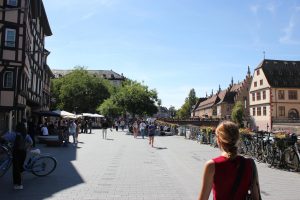 . The challenge alone of dealing with property management, the bank and driving school abroad makes you grow. In addition, communication with our coordinating organisation in France, l’Initiative Chrétienne d’Europe, has unfortunately not always been easy and has cost us quite a few nerves. Working full-time with small children, some of whom also have intellectual disabilities, is also something completely new for me. At the Foyer, I also see families breaking down, the effects of violence, and how laws then come into play, which is terrible but at the same time gives me a greater awareness of such situations. And yes, a year abroad also contributes something to “finding yourself”. 🙂
When I move back to Germany in six months, it will certainly not be easy to say goodbye to Strasbourg, but the advantage of spending a year abroad in a neighbouring country is that I can always return to my temporary home.
This project is funded by the European Solidarity Corps of the European Union.
by Tobias | 23.10.2025 | Audio & Video, Blog
Here we’d like to show you a few videos that were made during our tri-national youth exchange, “Generation Europe.” In addition to our group, the Youth Development Center from Ukraine and the Local Democracy Agency from Montenegro were also involved. In addition to our group, the Youth Development Center from Ukraine and the Local Democracy Agency from Montenegro were also involved.
Here and here are short TV segments, about the youth exchange. Turn on the English subtitles!
One Reel was created in Dresden and another in Podgorica. In addition, some participants in Podgorica were invited to appear on Montenegrin television. You can watch the video with subtitles here.
The project was funded by the European Union and the Free State of Saxony.